Gutter repair services in Sugar Hill, GA
Sagging gutters, leaking joints, and sections pulling away from fascia are the most common repair calls we get in Sugar Hill - and nearly all trace back to original spike fasteners that failed over years of Georgia's thermal cycling. We replace failed spikes with concealed screw hangers, restore correct pitch, reseal joints with flexible butyl, and match your existing gutter profile so repairs integrate cleanly with the system.
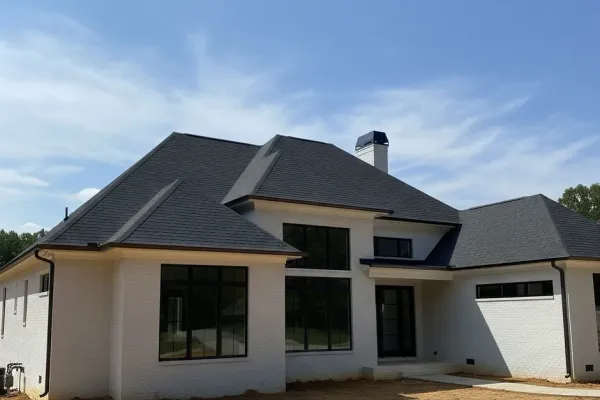
Gutter repair that addresses why gutters fail, not just the visible symptoms
Gutter failures in Sugar Hill homes follow predictable patterns depending on system age, installation quality, and the specific weather stresses the home has experienced. Aluminum spikes - the nail-style fasteners used in most installations built before 2005 - work loose from fascia boards over years of thermal cycling as aluminum expands in summer heat and contracts in winter cold. Once a spike loosens, the gutter section it anchored starts to sag at that point, disrupting pitch and creating a low area where water and debris accumulate. Debris weight accelerates the failure as the spike loosens further, eventually allowing the section to pull completely away from the fascia during heavy rain or storm events.
Best Sugar Hill Roofer has been repairing gutter systems throughout Sugar Hill and Gwinnett County since March 2016. We diagnose gutter failures at their root cause rather than simply re-attaching what's separated - re-nailing a loose spike into already-compromised fascia wood produces a repair that fails again within a season. Our approach replaces failed spike fasteners with concealed screw hangers that anchor into solid wood, corrects pitch at any sections that have lost their slope, and addresses any fascia damage before re-attaching gutter sections to ensure a solid structural anchor.
We match repair sections precisely to existing gutter profiles and colors, eliminating the obvious mismatches that signal budget repairs. Joint sealants are applied with products rated for Georgia's temperature range rather than standard caulk that hardens and cracks in the first winter. Downspout straps are checked and replaced with stainless screws where corroded aluminum hardware has failed. The result is a repair that integrates seamlessly with the existing system and holds up through the same thermal cycling that caused the original failure.
Failed spike replacement with concealed hangers
Aluminum spike fasteners are the most common gutter failure point in Sugar Hill's older housing stock. Once a spike loosens from the fascia board, the only correct repair is removing the spike, assessing the underlying wood for damage, and installing a concealed screw hanger with a longer fastener that reaches into solid wood behind any surface rot. We don't re-nail loose spikes into the same holes - that repair lasts one season at most.
Sagging section re-pitch and realignment
Sagging gutter sections that have lost their drainage pitch toward downspouts cause water to pool and debris to accumulate at the low point, accelerating corrosion and adding weight stress. We re-pitch affected sections to restore 1/4 inch of drop per 10 linear feet toward outlets, correct any hanger spacing that allowed sag between anchor points, and verify the entire run drains properly before leaving the job.
Joint and end cap resealing
Joints between gutter sections and end caps at run terminations are sealed with butyl-based sealant that remains flexible through Georgia's 100-degree annual temperature range. Standard caulk that hardens at low temperatures cracks through Georgia's winter freeze-thaw cycles and allows water to drip directly onto fascia boards below. We remove old failed sealant completely before applying new material to ensure proper adhesion.
Storm damage repair and fascia assessment
High-wind events that strip shingles routinely also damage gutters - tearing sections from fascia, denting channels, or bending downspouts at ground level where flying debris impacts. We document storm damage with photos before repair, which supports insurance claims, and assess underlying fascia condition before reattaching any sections. Gutters anchored to storm-damaged or softened fascia require fascia replacement first to provide a solid structural foundation for the gutter system.
Diagnosing gutter failures: what's actually causing the problem
Effective gutter repair starts with accurate diagnosis, and the visible symptom is rarely the whole story. A gutter that's pulling away from the fascia at one end usually indicates a sequence of failures - spikes that loosened over years of thermal cycling, a section that sagged as anchoring failed, accumulated debris weight that accelerated separation, and eventually moisture intrusion behind the gutter that softened the fascia wood below the point where the spike was anchoring. Reattaching the gutter without addressing the underlying sequence produces a repair that fails again within one to two seasons.
We diagnose gutter failures by working backward from the visible problem to identify what allowed it to develop. Sagging sections indicate hanger failure or spacing that was insufficient for the span. Active leaks at joints indicate sealant failure from age or thermal cycling. Water staining on fascia below the gutter line indicates either long-term overflow from insufficient capacity or improper pitch, or active leaking at an end cap or joint. Each failure type has a specific repair approach, and addressing only the most visible manifestation while leaving the underlying cause in place is not a repair - it's a postponement.
For gutter systems with multiple developing failures across the full perimeter, we provide a comprehensive condition assessment that distinguishes between sections that can be effectively repaired and sections where replacement is the better investment. A system with widespread spike failures, multiple leaking joints, and several sagging sections may have passed the point where piecemeal repair is cost-effective, while a system with isolated failures on otherwise sound sections is an excellent repair candidate. We make this distinction clearly and help homeowners understand the reasoning behind the recommendation.
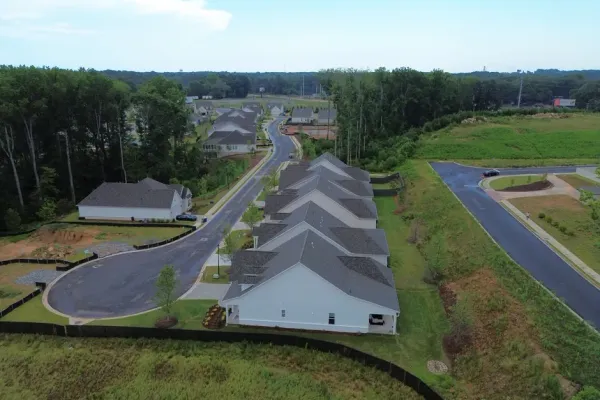
Sectional gutter repair versus seamless section replacement
Most Sugar Hill homes built before 2010 have sectional aluminum gutters - pre-cut sections connected with slip joints and sealed with caulk or gutter sealant. These systems develop two common failure modes as they age: joint failures where sealant has dried and cracked, allowing water to drip between sections rather than flowing to downspouts; and complete section failures where corrosion has compromised the channel or impact damage has bent the profile to the point where it no longer seats properly at joints.
Joint failures are repairable with proper cleaning and resealing using flexible butyl sealant. The critical step is completely removing the old failed sealant before applying new - sealant applied over old material bonds poorly and fails quickly under thermal stress. We clean joint surfaces thoroughly, apply butyl sealant generously around the full joint perimeter, and clamp sections until the sealant cures. A properly resealed joint should last five or more years before requiring attention again.
Sections with significant corrosion or physical damage are better replaced than repaired. We fabricate replacement sections from coiled aluminum stock to match the existing profile as closely as possible, then integrate them into the existing system with properly sealed joints. When the replacement section is long enough to justify it, we fabricate a seamless replacement to eliminate future joint maintenance at that location. Color matching on aluminum systems is generally close but rarely perfect after years of weathering - we show you the color options and let you decide whether to match as closely as possible or use the repair as an opportunity to update the gutter color throughout.
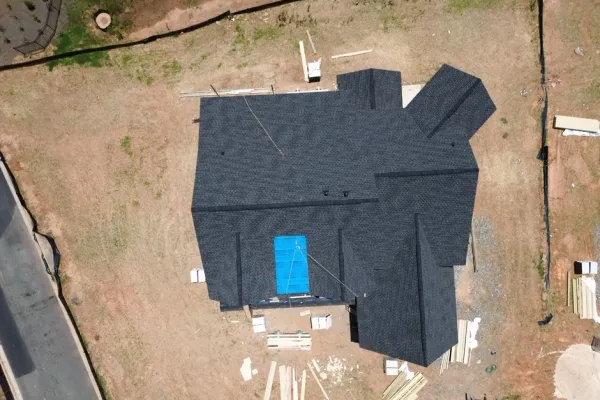
Fascia damage assessment and repair in conjunction with gutter work
Fascia board condition is the determining factor in whether gutter repair will hold. Fasteners driven into soft, rotted, or inadequately thick fascia material will pull out under load - particularly during the heavy debris accumulation that follows a storm or the weight stress of an ice event in winter. We assess fascia condition before any gutter reattachment and address damage before installing new fasteners.
Fascia rot in Sugar Hill homes typically progresses from the board ends, where end grain absorbs moisture from any gap in the paint or trim, and from behind gutter lines where persistent moisture from failed gutters or improper gutter pitch has kept the wood damp over extended periods. Soft spots at the ends can often be addressed by removing the compromised section and sistering in new material rather than replacing the full board. Widespread rot across a full fascia run requires complete board replacement, which we typically complete before re-installing gutters so the entire system has solid anchoring.
For homes where budget requires prioritizing which repairs to address first, we distinguish between fascia damage that represents an immediate failure risk for gutter attachment versus damage that's cosmetic or early-stage. Active separation that's allowing water behind the fascia requires immediate attention; surface paint failure on otherwise sound wood can be monitored. Our written condition report includes photos of all fascia findings so you have a clear record of current condition and can plan any phased repairs appropriately.
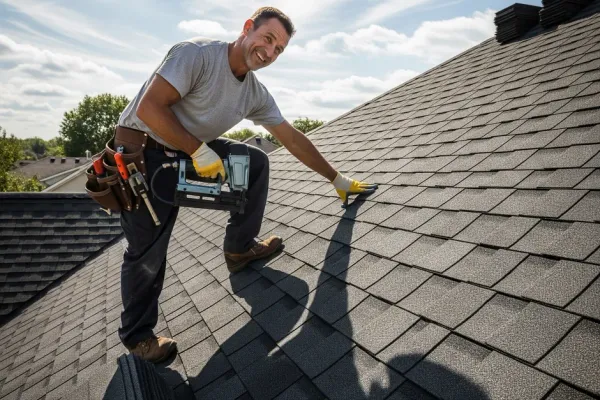
Downspout repair and drainage corrections
Downspouts are the most mechanically abused part of any gutter system. At ground level, they're hit by lawn equipment, kicked by children and pets, impacted by car doors in tight driveways, and bent by falling branches during storms. Even undamaged downspouts develop problems over time: straps that anchor them to the wall rust and fail, leaving sections hanging loose that eventually separate at upper elbow connections; underground extensions that clog with debris and back up during heavy rain; splash blocks that have settled and direct water toward the foundation rather than away from it.
We repair bent or damaged downspout sections using replacement materials that match the existing profile and color as closely as possible. Elbows that have separated at joints are reconnected with sheet metal screws and sealed at the joint to prevent future separation. Corroded straps are replaced with stainless steel hardware that resists the rusting that affects standard galvanized straps within a few years of Georgia humidity exposure. Downspout extensions and splash blocks are repositioned or replaced to ensure discharge occurs well clear of the foundation perimeter.
Underground downspout drains - buried extensions that carry water from downspout outlets to a discharge point in the yard - require occasional inspection because they can clog with debris or collapse in sections if backfill settles. When underground drainage backs up, water exits at the downspout base rather than at the intended discharge point, exactly where you don't want it. We flush underground extensions and can camera-inspect buried sections when blockage doesn't clear with flushing. Call (470) 888-0030 or email bestCityRoofer@gmail.com to schedule a gutter repair assessment.
Schedule your gutter repair assessment today
Don't let failing gutters damage your Sugar Hill home's fascia and foundation. Call (470) 888-0030 or email bestCityRoofer@gmail.com for an honest assessment and written repair estimate with no pressure and no manufactured urgency.