Roof inspection services in Sugar Hill, GA
A professional roof inspection gives Sugar Hill homeowners an accurate picture of their system's actual condition - not a sales pitch. We examine every component from ridge to eave and deliver a written report with photos, prioritized findings, and honest recommendations you can act on with confidence.
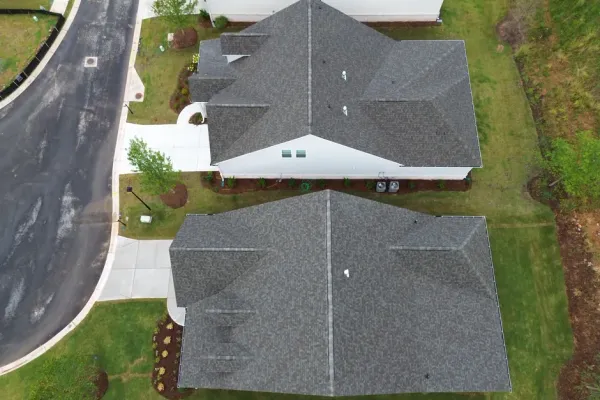
Comprehensive roof assessment for informed decisions
Most Sugar Hill homeowners have no reliable baseline for their roof's condition. They know it hasn't leaked recently, which they take as a good sign - but recent absence of leaks and actual structural soundness are very different things. By the time a roof begins showing interior moisture symptoms, the underlying damage is often months or years old. A professional inspection establishes the true picture before that gap becomes an expensive surprise.
Best Sugar Hill Roofer has been conducting roof inspections throughout Gwinnett County since March 2016. Our inspectors follow a structured protocol that covers the full exterior roofing system - shingle condition by zone, flashing integrity at every transition, penetration seal status, valley and eave drainage patterns, ridge ventilation output, and soffit intake condition. We then examine the attic interior for evidence of moisture infiltration, inadequate ventilation, and structural anomalies not visible from outside.
Every inspection produces a written report with photographs keyed to specific findings and a clear priority rating system: items requiring prompt attention, items to monitor at the next annual inspection, and items in acceptable condition. That differentiation matters. We won't inflate urgency on findings that genuinely don't require immediate action, and we won't understate conditions that do. Our goal is to give you a reliable picture of your roof's actual status and an honest assessment of what, if anything, needs to happen next.
Comprehensive 20-point inspection protocol
Our inspection covers the full roofing system in a consistent sequence: granule retention across shingle fields, flashing condition at all penetrations and wall intersections, valley liner integrity, eave and rake drip edge attachment, gutter integration, soffit and ridge ventilation balance, and attic interior examination for moisture staining, rafter stress, and insulation condition. No section gets skipped because it's hard to reach.
Photo-documented written reports
Every inspection delivers a written report with dated photographs tied to specific findings and a clear priority classification for each item. You leave with a document you can reference, share with your insurance carrier, or present during a home sale - not a verbal summary you'll misremember three months later.
Gwinnett County code-aware assessment
Our inspectors are familiar with Gwinnett County building code requirements for roofing systems, including minimum ventilation ratios, underlayment specifications, and flashing requirements. When we find conditions that fall short of current code standards - especially on homes that were re-roofed years ago under less stringent requirements - we note this separately from general wear findings.
Insurance and pre-purchase documentation
Inspection reports produced by Best Sugar Hill Roofer meet the documentation standards insurance carriers require for storm damage claim support and home purchase due diligence. Our reports include material age estimates, condition ratings, and photographic evidence in formats that hold up under adjuster scrutiny and real estate transaction review.
Pre-purchase roof inspections for home buyers
Gwinnett County's real estate market moves quickly, and standard home inspections rarely give buyers a complete picture of roofing system condition. General home inspectors walk roofs in 15 to 20 minutes, note obvious visible damage, and move on. That approach misses the conditions that become expensive problems: marginal granule retention that signals a roof 18 months from failure, step flashing that has separated but hasn't yet leaked enough to stain ceilings, or a chimney crown with hairline cracks that will allow significant water infiltration after the first hard freeze.
Our pre-purchase inspections for Sugar Hill home buyers are conducted with the same thoroughness we apply to annual maintenance visits. We examine shingle condition zone by zone, probe deck integrity where accessible, evaluate flashing at every transition, assess attic ventilation balance, and look for evidence of past leak events in the attic interior. We provide a written report with photographs that can be shared with sellers in purchase negotiations or used to plan maintenance budgets for the first few years of ownership.
For buyers considering homes with roofs more than 12 to 15 years old - common in Sugar Hill's established neighborhoods - our report includes a remaining service life estimate based on material type, current condition, and Gwinnett County's climate stress factors. This gives buyers a realistic timeline for replacement planning rather than an unwelcome surprise several years down the road.
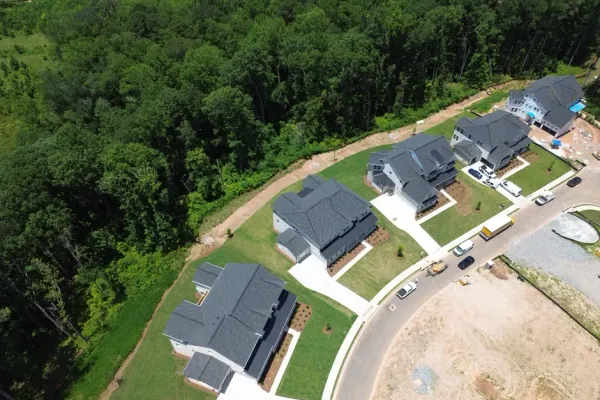
Post-storm damage inspection and insurance documentation
After a significant storm event in Sugar Hill - particularly spring hailstorms that move through the Buford-Sugar Hill corridor with one-inch or larger stones - the window for documenting damage accurately is narrow. Shingle surfaces continue weathering immediately after impact, and time makes it progressively harder to distinguish new hail bruising from general aging. Insurers know this, which is why prompt post-storm inspection and documentation is critical for Sugar Hill homeowners considering a claim.
Our post-storm inspections are structured around the documentation requirements insurance adjusters use when evaluating hail and wind damage claims. We measure impact density per test square using standard protocols, photograph the full pattern of functional damage across shingle fields, document displaced granule accumulation in gutters and at downspout discharge points, and evaluate secondary damage to vents, caps, skylights, and gutters that often accompanies significant storm events.
The written report we produce distinguishes clearly between new storm damage and pre-existing conditions, which is exactly the distinction insurance carriers require for accurate claim processing. We can present our findings directly to adjusters during re-inspection meetings when initial assessments come in below documented damage levels - a scenario that occurs regularly in high-volume storm seasons affecting the greater Gwinnett County area.

Annual maintenance inspection and condition tracking
A single inspection tells you where your roof stands today. A consistent annual inspection schedule tells you how it's aging and lets you catch the conditions that develop slowly over time - the kind that turn manageable maintenance items into emergency repairs when they go undetected for two or three years.
Sugar Hill's climate creates a predictable annual stress cycle for roofing materials. Summer UV exposure accelerates oxidation of sealants and surface coatings. Fall leaf accumulation holds moisture against shingle surfaces and clogs valleys and eave areas. Winter freeze-thaw cycles stress flashing joints and expand any water that has infiltrated microfractures. Spring storms test every component the previous three seasons have weakened. Annual inspections, scheduled in late fall or early spring, catch the cumulative effects of that cycle before individual findings compound into bigger problems.
We maintain a documented inspection history for regular clients so year-over-year changes are tracked rather than assessed in isolation. Gradual granule loss that looks unremarkable in a single inspection becomes a clear pattern - and a clear planning signal - when compared against previous-year photographs. That historical record also supports insurance claims and resale documentation, demonstrating consistent professional maintenance of your Sugar Hill home's most critical protective system.

What our inspectors actually examine on every visit
Understanding what a thorough roof inspection covers helps Sugar Hill homeowners evaluate the service they're receiving. Our inspection protocol examines the following components in sequence, with photographic documentation of any finding that warrants a homeowner decision.
Exterior shingle field: granule retention across all roof zones, impact bruising patterns, surface cracking, cupping or curling at edges, exposed fiberglass mat indicating advanced wear, and nail pop-through at fastener lines. Flashings: step flashing integrity at all dormers and wall intersections, base and counter flashing at chimneys, boot seals at all plumbing and mechanical penetrations, valley liner condition, drip edge attachment at eaves and rakes. Ridge and hip: cap shingle adhesion, ridge vent integrity, and fastening pattern assessment. Ventilation: soffit intake area adequacy, ridge exhaust capacity, and balance between intake and exhaust in the context of attic volume. Attic interior: moisture staining on rafters and sheathing, insulation condition, light intrusion through deck, and structural member assessment for signs of stress or previous water damage. Gutters: integration with roof system, overflow indicators on fascia, and evidence of gutter-related moisture migration at fascia boards and soffits.
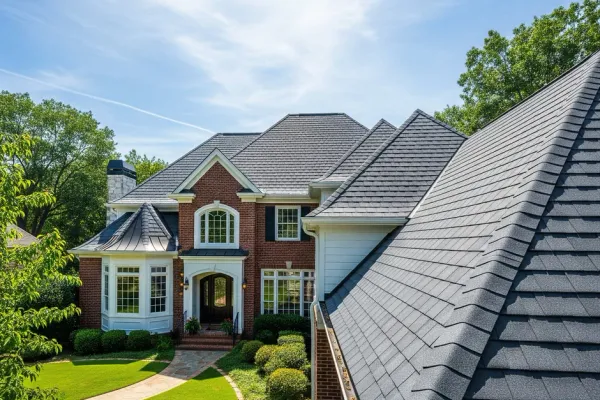
Schedule your professional roof inspection
A proper roof inspection is the starting point for every good maintenance decision. Call (470) 888-0030 or email bestCityRoofer@gmail.com to schedule your inspection - you'll receive a written, photo-documented report and straight answers about your Sugar Hill roof's actual condition.