Roof ventilation services in Sugar Hill, GA
An underventilated attic in Sugar Hill's summer heat can push temperatures above 150°F, accelerating shingle aging, overwhelming your AC system, and trapping moisture that silently degrades decking and insulation. Our ventilation assessments identify exactly what your system is missing and install balanced ridge-to-soffit airflow solutions that protect your roof and reduce your energy costs.
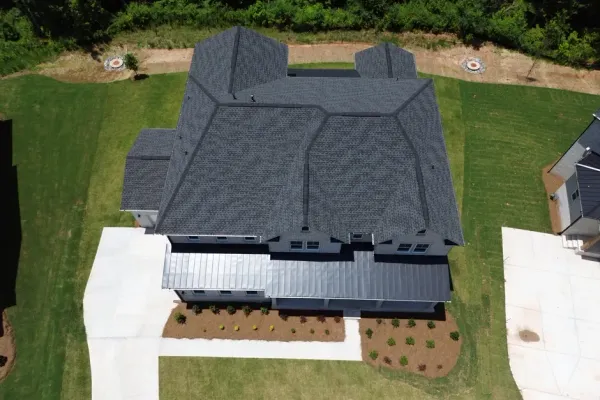
Comprehensive ventilation solutions for Sugar Hill homes
Roof ventilation is among the most misunderstood components of residential roofing, and Sugar Hill homeowners pay the consequences of poor ventilation in two distinct ways: elevated summer energy bills and shortened roof system lifespans. Both problems are preventable with properly designed ventilation - and both worsen gradually enough that most homeowners never connect the symptoms to their attic's airflow conditions until the damage is already done.
Best Sugar Hill Roofer has been evaluating and upgrading ventilation systems throughout Gwinnett County since March 2016. We approach every ventilation assessment with a calculation-based methodology: we measure the attic floor area, calculate the required net free ventilation area using the 1:150 standard ratio (adjustable to 1:300 where a vapor barrier is present), then evaluate existing intake and exhaust capacity against that requirement. The result is a specific, defensible number - not a vague recommendation to "add some vents."
In Sugar Hill's climate, the stakes for getting this right are high. Attic temperatures in under-ventilated homes regularly exceed 140°F to 160°F during July and August, conditions that accelerate asphalt shingle oxidation, void manufacturer warranties that specify maximum operating temperatures, and force air conditioning systems to work against extreme radiant heat loads through ceiling assemblies. Correcting ventilation is often the single highest-ROI roofing improvement a Sugar Hill homeowner can make.
Calculation-based airflow analysis
We calculate your attic's required net free ventilation area based on floor square footage, evaluate existing intake and exhaust capacity against that requirement, and identify the specific deficit. This gives you a precise answer - not a general sense that "more vents would help" - and allows us to specify exactly what components will bring your system to code-compliant performance.
Ridge vent and soffit vent balance
A ridge vent without adequate soffit intake doesn't ventilate - it creates negative pressure that draws conditioned air from living spaces rather than outdoor air from the eaves. Proper ventilation requires balanced intake and exhaust. We evaluate both sides of the equation and address whichever side is limiting system performance, whether that means adding ridge vent footage, clearing blocked soffit panels, or installing continuous soffit venting to replace inadequate individual vent spacing.
Energy cost reduction through attic temperature control
Sugar Hill's summers are long and hot, with July and August regularly producing sustained periods of 90°F-plus outdoor temperatures. In an under-ventilated attic, radiant heat from a superheated shingle surface turns the attic space into a heat battery that pumps thermal energy into your living space throughout the evening hours. Properly balanced ventilation that exhausts this heat accumulation can reduce attic temperatures by 40°F to 50°F and meaningfully reduce the workload on cooling systems serving upper floors.
Winter moisture management in Gwinnett County
Attic ventilation's winter function is less intuitive but equally important in Sugar Hill. Warm, humid air from living spaces rises into attic spaces where it contacts cold roof decking. Without adequate ventilation to exhaust that moisture-laden air, condensation accumulates on framing and sheathing through the winter months - producing the same moisture damage patterns as active roof leaks without any water ever penetrating the exterior surface.
Ridge vent installation: the backbone of attic exhaust
Ridge vents are the most effective passive exhaust solution available for residential roofing, and they're the first component we specify for Sugar Hill homes that need ventilation improvement. Positioned at the roof's highest point, they take advantage of natural thermal convection - hot air rises through the attic and exits at the ridge while cooler outside air enters through soffit vents at the eaves, creating a continuous exchange that prevents heat and moisture accumulation without any mechanical components to fail or maintain.
Our ridge vent installations begin with cutting a continuous slot along the ridge board - typically 2 inches on each side of the ridge line - to provide the exhaust opening the vent bridges over. We protect the exposed underlayment edges from weather infiltration, install the ridge vent product with proper end-cap closures, and integrate the cap shingles over the vent body in a pattern that maintains weather resistance while preserving vent airflow.
In Sugar Hill's climate, ridge vent product selection matters. We specify ridge vents with an external weather baffle that deflects wind-driven rain and debris away from the vent opening - an important feature in a community that sees significant high-wind storm events. Products without this baffle can admit wind-driven moisture under the right conditions, defeating their purpose. Our installations use products that maintain effective airflow across the range of wind speeds Sugar Hill regularly experiences while preventing weather infiltration under adverse conditions.
The most important rider on ridge vent installation is this: a ridge vent only works when the soffit intake is adequate to supply it. We evaluate soffit capacity as part of every ridge vent project and won't install ridge ventilation on a system with inadequate intake, because the result would be a net neutral - or even negative - change in ventilation performance.
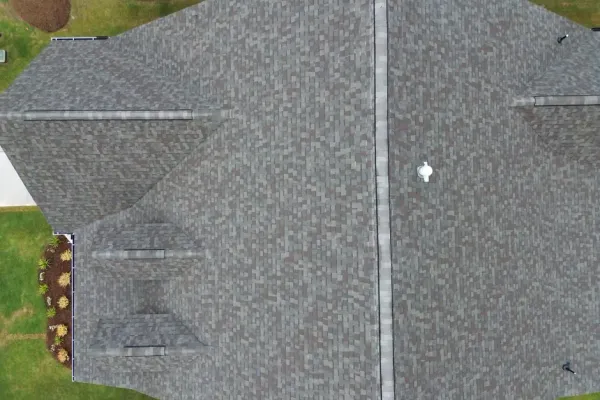
Soffit ventilation: the intake side of the equation
More ventilation problems in Sugar Hill homes are caused by inadequate intake than by inadequate exhaust, but soffit conditions are harder to evaluate visually - which is why this side of the system gets overlooked. The critical metric is net free area: the actual open space available for airflow through the soffit vent material after accounting for the screen mesh, which significantly reduces the gross vent opening size. An 8x16-inch individual soffit vent with 50 percent free area rating provides much less actual airflow than its dimensions suggest.
Common soffit ventilation problems we find in Gwinnett County homes include individual round vents spaced too far apart along the eave to provide adequate linear intake coverage, original vinyl soffit panels with vent perforations that have been painted over during house repaints, and blown insulation that has covered the inside of the soffit vent openings, completely blocking intake airflow. The last problem is especially common in older Sugar Hill homes where additional insulation was blown into the attic floor without installing proper baffles to maintain the air channel between insulation and the roof deck at the eave.
We offer three soffit ventilation solutions depending on the existing soffit construction: individual vent upgrades that replace undersized or painted-over vents with higher-capacity units, continuous soffit vent installation that replaces sections of solid soffit panel with perforated material providing uninterrupted linear intake, and interior baffle installation that clears blocked eave channels and re-establishes the airway from soffit to attic. The right solution depends on your home's specific construction and the calculated intake deficit we measure during our assessment.
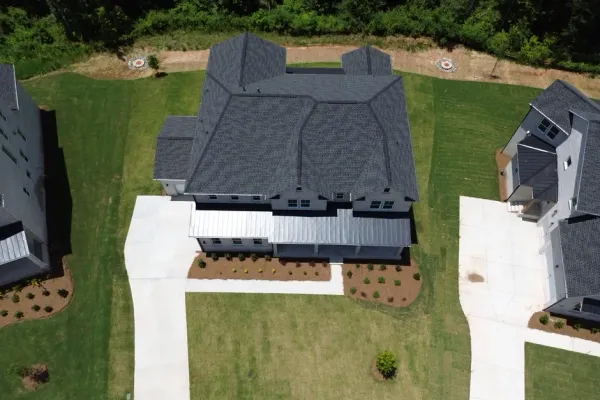
Powered attic ventilation: when and why it makes sense
Powered attic fans - both hardwired electric units and solar-powered versions - are frequently recommended in Sugar Hill's hot climate, and they do provide real benefits in specific situations. But they're also frequently oversold as universal solutions when passive ventilation improvements would accomplish the same result at lower cost and with no ongoing energy consumption or maintenance requirements. Our approach is to recommend powered ventilation only after evaluating whether passive improvements are sufficient.
Powered ventilation makes sense when roof geometry prevents continuous ridge vent installation - hip roofs with minimal ridge length, complex rooflines with multiple intersecting planes, or shallow-pitch roofs where ridge vent products don't perform effectively. In these cases, a properly sized thermostatically controlled power fan can provide exhaust capacity that passive options can't deliver on the available roof surface.
Solar-powered attic fans are a particularly appropriate option for Sugar Hill homes because their output is highest when solar irradiance is highest - exactly the same conditions that drive peak attic heat accumulation. They operate without electrical connections, reducing installation complexity and eliminating ongoing operating costs. We size solar units based on attic volume and the calculated exhaust deficit, not manufacturer marketing claims, to ensure the installed capacity actually addresses the ventilation shortfall.
Regardless of power source, powered fans must be paired with adequate intake ventilation to perform effectively. A powered fan that draws more air than the soffit intake can supply will create negative pressure in the attic - drawing conditioned air from living spaces through ceiling penetrations, which costs more in cooling losses than the fan saves in attic temperature reduction. We evaluate the full system before specifying any powered component.
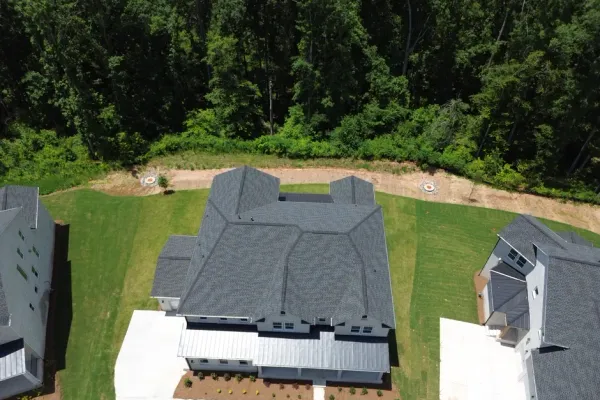
Complete ventilation system balance: the full picture
Attic ventilation works as a system, and improving one component without addressing others can produce counterproductive results. A common example in Sugar Hill homes: a previous contractor installed additional ridge vent footage on an already exhaust-heavy system, but the soffit vents remain blocked or undersized. The increased exhaust capacity with unchanged intake restriction worsens the negative pressure condition, increasing the rate at which conditioned air is drawn from living spaces.
Our ventilation system assessments measure both sides of the equation and produce a balanced improvement plan. We calculate the total net free ventilation area required for your attic's square footage, measure existing intake and exhaust capacity separately, identify which side is limiting system performance, and specify additions or modifications that bring both sides to balanced compliance. In most Gwinnett County homes, intake is the limiting factor - existing ridge vents and box vents provide adequate exhaust, but soffit intake is blocked or undersized, preventing the exhaust capacity from being utilized.
After installation, we walk through the attic interior to verify that newly opened or added intake pathways are clear from insulation interference and that airflow channels from soffit to ridge are unobstructed. This final verification step is where many ventilation improvement projects fail - the exterior installation is correct, but interior conditions prevent the improvement from functioning as designed. We don't close out a ventilation project until we've confirmed the airflow path from intake to exhaust is fully functional.
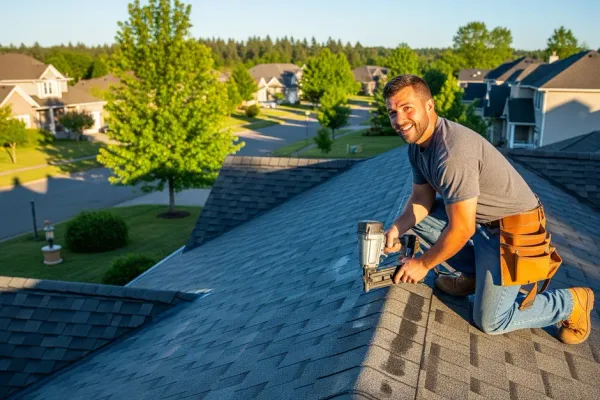
Improve your home's ventilation system today
Poor attic ventilation costs Sugar Hill homeowners in shortened roof life and higher cooling bills every summer. Call (470) 888-0030 or email bestCityRoofer@gmail.com for a calculation-based ventilation assessment - we'll tell you exactly what your system needs and what it will accomplish.